· Wade Corrigan
How Long Should a Bow Stabilizer Be?
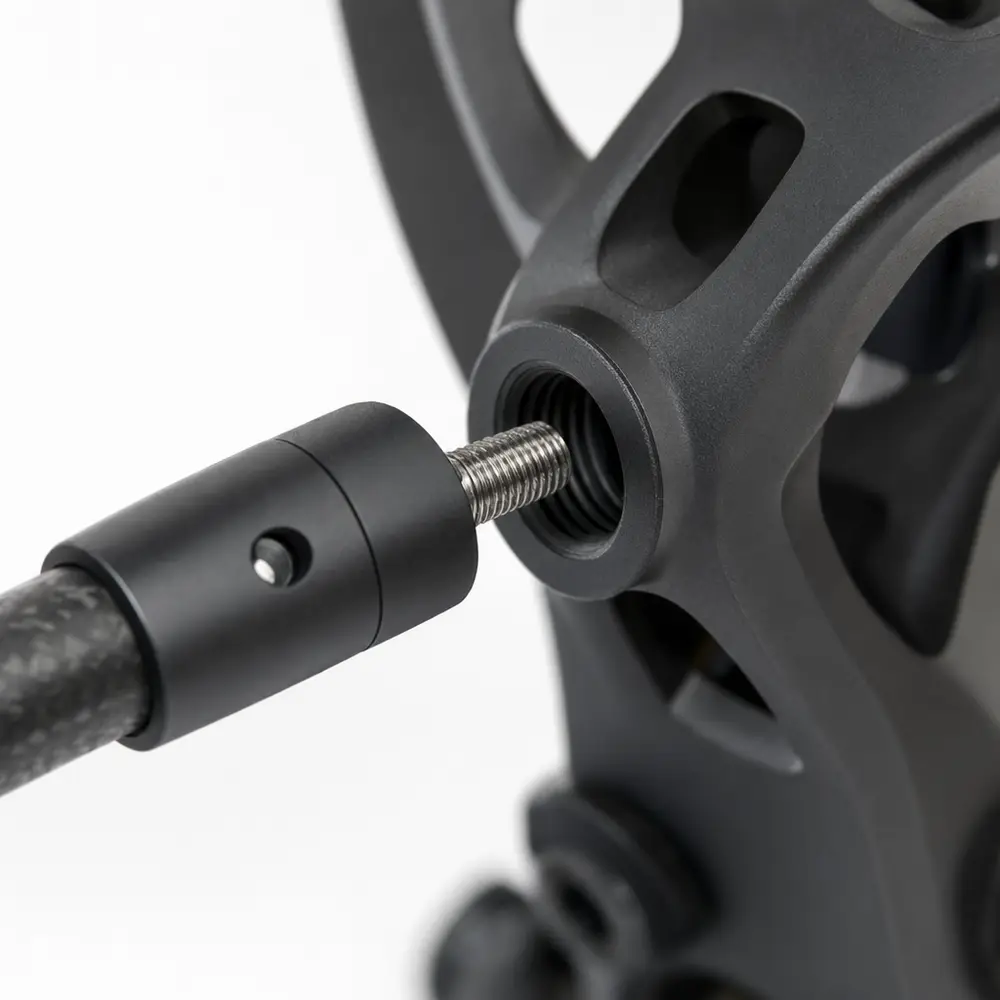
Bow stabilizer length is the one spec that actually changes how your bow behaves — more than finish, more than branding, and, within a sensible range, more than weight. After nine years of hunting and shooting 3D courses, I can tell you most archers pick a sound stabilizer and the wrong length for where they shoot. This guide walks through what each length is genuinely good at, with the listed weight of every SteadyDraw size, so you can pick once and stop thinking about it. If you're still fuzzy on what the bar does in the first place, start with what a bow stabilizer does and come back.
maximum stabilizer length allowed in NFAA bowhunter equipment styles — one reason 8–12 inch bars dominate hunting rigs and field courses
— NFAA Constitution & By-Laws, 2025
Why length matters more than anything else
This is simple lever physics, and it cuts both ways. A short bar keeps your bow compact and quick to move, but its mass sits close to the riser, so it does less to slow down wobble. A long bar puts the same mass on a longer lever arm and calms the sight picture far more effectively — which is exactly why dedicated target archers accept bars that would be absurd in a treestand. There is no "best" length in the abstract. There is only the best length for the ground you shoot on.
One thing that makes the choice cleaner with the SteadyDraw carbon bow stabilizer: all five lengths share the same 3K carbon fiber rod, the same 3.9 cm bar diameter, and the same stainless steel counterweight, and the weight spread across the whole range is small. You're not choosing between different products — you're choosing how much leverage you want from the same one.
the entire weight spread between the 6-inch (314.2 g) and 15-inch (346.7 g) SteadyDraw — with this design you choose length, not a weight penalty
— SteadyDraw spec sheet, 2026
The simple rule for choosing
That single paragraph settles it for most people. The sections below add the detail — weights, prices, and the caveats for each size — so you can sanity-check the rule against your own setup before you pick a length on the SteadyDraw order section.
Every SteadyDraw length, by the numbers
These are the spec-sheet figures for each complete unit, counterweight included — with the spec sheet's own caveat: "manually measured, slight deviations may occur." Note that the listed length runs past the nominal size, because the nominal figure names the bar format while the listed length covers the whole assembled unit.
| Nominal length | Size (dia. × length) | Weight | Price | Best for |
|---|---|---|---|---|
| 6" | 3.9 × 23.9 cm | 314.2 g (11.1 oz) | $49.95 | Ground blinds, treestands, thick cover |
| 8" | 3.9 × 29.1 cm | 319.2 g (11.3 oz) | $52.95 | All-around hunting |
| 10" | 3.9 × 34.1 cm | 322.5 g (11.4 oz) | $52.95 | Mixed hunting and 3D |
| 12" | 3.9 × 39.2 cm | 330 g (11.6 oz) | $54.95 | 3D courses, target practice |
| 15" | 3.9 × 47.2 cm | 346.7 g (12.2 oz) | $59.95 | Target lines, recurve setups |
Weights include the stainless steel counterweight. All five lengths share the same screw-in mount size, standard across modern riser bushings.
6 and 8 inches: the hunting lengths
If you've ever swung a bow inside a ground blind, you already know why the 6-inch exists. At 23.9 cm and 314.2 g, it's the most compact and lightest bar in the line, and its job is damping first, balance second: the built-in weight damping ball takes the buzz out of the shot without adding reach you'd snag on a shooting window. It gives up some steadiness to the longer bars — that's the deal — but a stabilizer you can actually maneuver beats a longer one you leave in the truck.
The 8-inch is what I'd put on most hunting compounds, and it's the length I reach for when someone just says "which one?" It adds real leverage over the 6-inch for only 5 grams more, still tucks inside the footprint of most rigs, and stays legal in the NFAA bowhunter styles with room to spare. For the full hunting-side reasoning — noise, maneuverability, treestand realities — see the hunting bow stabilizer guide.
10 and 12 inches: the crossover lengths
The 10-inch is the compromise length, and for once "compromise" isn't a criticism. At 322.5 g it's barely heavier than the hunting bars, but the extra reach slows your float enough to feel at 3D distances — while remaining short enough that hunting with it is entirely reasonable. If your bow is a compound that does double duty, this is the length I'd argue for.
The 12-inch is where the priorities flip. You'll feel the added steadiness on every deliberate shot, and at 330 g it still isn't a heavy bar in absolute terms. One flag worth stating plainly: "12-inch" names the nominal bar size, not the assembled length — with the counterweight mounted, this unit measures 39.2 cm (about 15.4 in) end to end, past the 12-inch cap NFAA bowhunter equipment rules set. If you compete in a length-limited class, measure the assembled bar against your rulebook before buying rather than going by the nominal name. For general 3D and target use, where no length cap applies, this is the length I'd reach for.
15 inches: the target and recurve length
At 47.2 cm and 346.7 g, the 15-inch puts meaningful mass far enough from the riser to genuinely slow the sight picture — the closest thing to a long-rod feel you can get in a bar that still fits in a backpack tube and doubles for training days. Recurve archers get the most out of it: modern recurve risers carry the same standard front bushing, and the universal screw fittings thread straight in. The recurve bow stabilizer guide covers that setup in detail.
Worth knowing if you're eyeing competition: the World Archery Rulebook (Book 3, Target Archery) sets no maximum stabilizer length for the Recurve Division — the practical limits are your class rules and your neck muscles. The exception is barebow, where the equipment must stay compact enough to pass a ring test, which rules out stabilizer bars entirely.
the ring an unstrung barebow (accessories fitted) must pass through under World Archery equipment rules — why barebow archers run weights, not stabilizer bars
— World Archery Rulebook, Book 3, 2024
Edge cases the rule doesn't cover
A few situations bend the starting rule, so here they are, honestly handled:
- Your bow already feels nose-heavy. Go one length shorter than the rule suggests. A stabilizer should settle the bow, not turn every hold into a workout — and you can fine-tune with the detachable counterweight either way, as covered in the stabilizer setup guide.
- You hunt exclusively from a blind or stand. Ignore the all-around advice; the 6-inch is your bar. Reach you can't swing is reach you don't have.
- You shoot competitive classes. Read your class rules before buying. Bowhunter-style divisions commonly cap stabilizers at 12 inches; open and freestyle classes typically don't. The rulebook beats any guide, including this one.
- You're a recurve archer deciding between 12 and 15. Take the 15. Recurve setups reward front stabilization, and the extra reach costs you nothing in a target lane.
- You genuinely can't decide between two lengths. Hunters take the shorter one, target shooters the longer one. Nobody has ever missed because their stabilizer was an inch too short; plenty of hunting shots have gotten awkward because the bar was too long for the cover.
The bottom line
Pick by ground: 6-inch for blinds and thick cover, 8-inch for general hunting, 10-inch if you split hunting and 3D, 12-inch for 3D and target work, 15-inch for target lines and recurves. Every length ships with the same carbon rod, stainless counterweight and universal fittings, with free shipping and a 30-day money-back guarantee — and you can read what buyers say in the SteadyDraw reviews. If you want the wider market context first, the best bow stabilizer breakdown compares us honestly against the big-brand and budget options. Otherwise, choose your length below and go shoot.

Wade Corrigan · Bowhunter & 3D archer, 9 yrs
Wade has spent nine years hunting and shooting 3D courses.
Written by Wade Corrigan · See our testing methodology.